


There is a youthful energy most of us recognize. Maybe you remember it in yourself, maybe you see it in younger people than you. A kind of rawness. The person showing early signs of the qualities, the spirit, of what is in store. Not the finished thing, but the silhouette against a distant horizon of what the finished thing will be.
This is how formation works. Vision first, after which the prototype that refines it. Then the finished product. John the Baptist is the prototype which is a process unto itself.
John the Baptist didn’t perform miracles. He didn’t build an institution or establish a theology. He went into the wilderness, spoke with unusual clarity and stark bluntness, and pointed at something beyond himself. His entire ministry was defined by one orientation: I am not the one. But he is coming, and you need to be ready.
He must increase. I must decrease.
This is not a pattern that ends with John the Baptist from the Bible. The pattern repeats. There are people in every generation that function the same way. They offer a portal that opens something different than what you might be used to. Whether you think it’s valuable or not is entirely up to you to decide.
I want to introduce you to two of them.
Jordan B. Peterson — The Wilderness of the Mind
Jordan Peterson reaches a specific kind of person: the one who needs to understand before he can believe. The person who has decided that serious thought and religion are incompatible, and has eventually moved on from the question entirely.
JBP takes the stories of the Bible and demonstrates, with genuine intellectual rigor, that these are not primitive attempts to explain what science has since replaced. They are precise maps of human reality, maps of meaning. They have survived because they are true. Not literally at the expense of meaning. Not symbolically at the expense of reality. Both, at the same time.
He gives intellectual permission to study these things.
For me, Peterson arrived as a father figure. Responsibility, order, the weight of what it means to take your own life seriously. Clean your room. Then maybe you have something worth saying. That sounds simple, and of course it doesn’t mean only perfect people have the permission to speak. But if your mental state is in turmoil, why should you reflect it into the world?
The voice in the wilderness telling me to clean my room. The start of what came after.
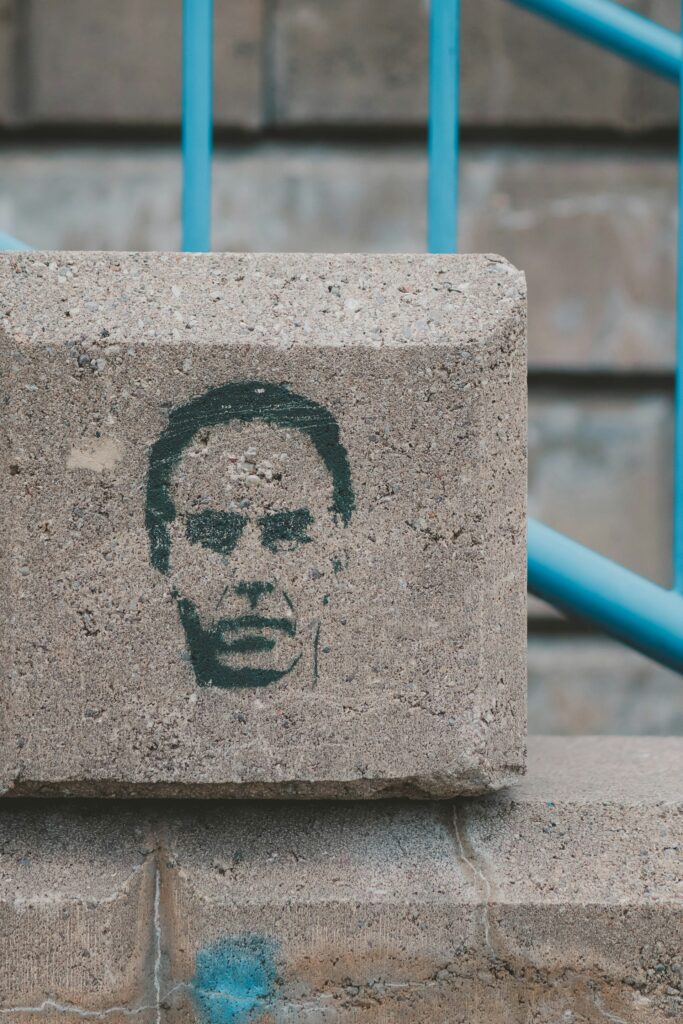
JBP shows something about how goal-setting works on the psychological level. A meaningful goal changes how you experience difficulty. Not just metaphorically, but also chemically. The hockey player playing through a broken ankle isn’t just tolerating pain, the larger goal actively counteracts it. This is documented. The prototypes, even if incomplete, work because they redirect your energy toward something genuinely worth pursuing, and then the whole system responds to the goal.
However, every goal eventually shows you its nature. King Solomon tested this more rigorously than most of us ever will. Wealth, wisdom, pleasure, achievement, all of it pursued to the limit. What he realized was difficult to swallow: Vanity of vanities. The hollowness that follows an achieved goal isn’t always a sign that you chose wrong. Sometimes it’s the goal itself telling you something:
This is not the main road.
Every destination short of the house you are meant to return to will eventually reveal its own insufficiency.
For a generation of men, who had simply concluded that faith and serious thought were incompatible in the wake of New Atheist thinkers, Peterson’s intellectual permission was desperately needed.
Jordan has moved around the Christian claim for years. He acknowledges its depth. He approaches it from every angle. He seems to stop just short of it. That question marks the current edge of his map of meaning.
Jesse Lee Peterson — The Wilderness of the Heart
If JBP cleared the intellectual ground, Jesse Lee Peterson went into another dimension of my being that I was not so familiar with — my relationship with my own thoughts.
He doesn’t build systems or argue from frameworks. He speaks from the inside out. Something he has personally encountered rather than intellectually constructed. He sits across from men and women who are often angry and lost, often carrying wounds they are not aware of, and he says something so simple it takes every recipient by surprise.
Forgive your mother. Do the silent prayer. Every morning. Every evening.
That’s it. That’s not a therapy technique or a deep psychological analysis of your life. It is a spiritual imperative. The anger you’re carrying is the root and until you go back to that root and release it, nothing else will work. You will keep performing the same patterns, calling them by different names, wondering why nothing changes. You become what you hate, and what you hate, you might not recognize intellectually.
Silent prayer is not petitionary prayer, not liturgical prayer. It is silence. Be still, and know that I am God. Sit still and do nothing. Most people can’t do it for five minutes, and that inability is itself the diagnosis.
His approach is blunt to the point of seeming crude. But the crudeness is the point. He’s not interested in your victim narratives. He’s telling you to stop mistaking the noise in your head for who you are.
What JLP opened in my own life was the understanding that I am not my thoughts, and that I could gain distance from them to attain peace. To be at the still waters. And how early relational patterns were frozen in time into identity. How anger had become my armor. How the performance-based relationship with love, the love that needed to be earned, had never been examined, only reinforced.
That work didn’t end with JLP’s framework. It couldn’t. His map is real but Jesse the Baptist only prepared me for an encounter with God that went beyond what his framework alone could contain. The first portal became another portal which became another portal.
He is a voice in the wilderness, not the destination. He would be the first to tell you that.
The Pattern Beneath the Figures
What these sons of Peter share is not a theology or a methodology but a function.
Each one offers a portal for a specific kind of person. Some people lead with the mind, and some with the heart, but we all are both, and when we walk the road, one thing will always remain true:
I must decrease.
This requires a specific kind of humility that is easy to lose. The prototype who begins to believe he is the finished product has already lost the essential quality that made him valuable. None are exempt from that risk including the person who is writing this.
Humility is not thinking less of yourself. It’s thinking of yourself less. It’s an honest acknowledgment that our understanding is fragmented by nature. We are not the whole. Whatever decreases so that something greater can enter is functioning as John the Baptist at that scale. JBP and JLP operate at the cultural level, but the pattern goes deeper than that.
Even within yourself there is the deepest organizing center. The part of you that watches the noise. Uncovering it and restoring its kingship clears the false identity, dissolves the performance-based relationship with love, and reorients the interior life.
But that’s not where the story ends. It becomes another portal into a deeper reality about the nature of things. A mystery unfolds at every level of observation.
I invite you to look inward. The thing that changed you and then ran its course. You know what it is.
Did you think that was the destination, as I did?
The Wine Kept Until Last
There is a moment at the wedding in Cana that tends to get overlooked by the miracle itself.
The steward tastes the wine Jesus made from water and goes to the bridegroom with an observation.
Everyone serves the good wine first. When people have drunk freely, then the poor wine. But you have kept the good wine until now.
The natural order is decline, entropy. The best is constructed first and then either reinforced or left to be consumed. Jesus reverses this entirely.
The baptists are real wine. Good wine. Necessary wine. Without them the feast doesn’t begin. But they are not the best wine.
The best wine arrives after the insufficiency shows itself, after you have drunk deeply from everything that came before and found that something is still missing.
It’s not a more intense version of what came before but a different category entirely. The only goal that isn’t vanity.
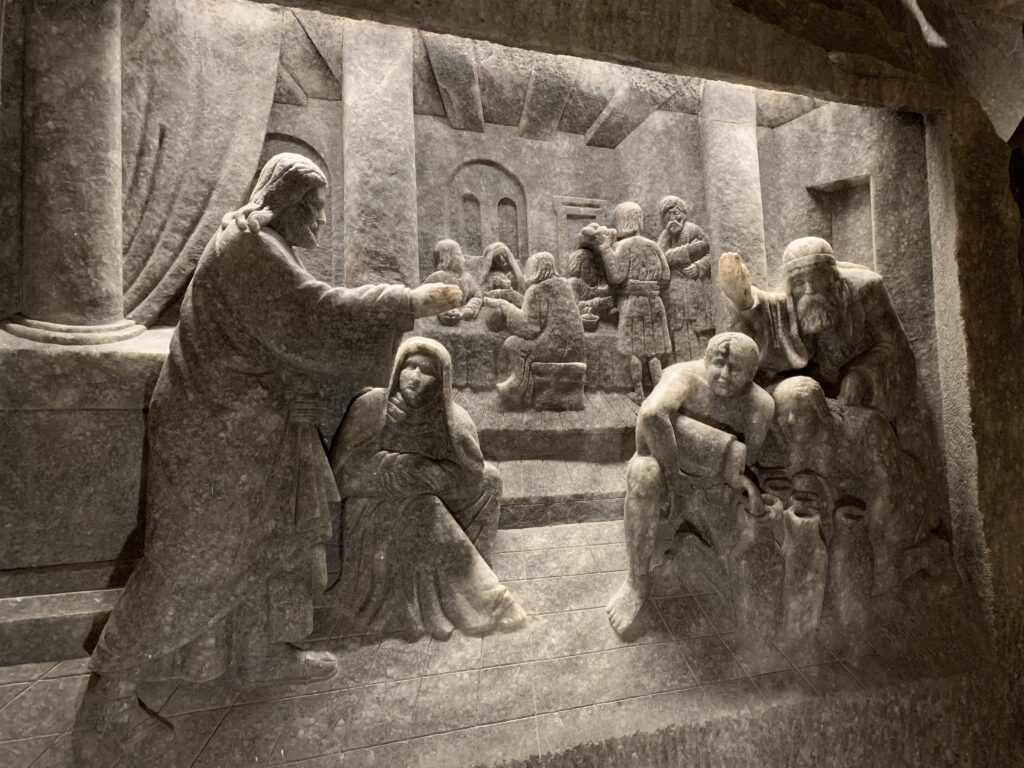
But you have kept the good wine until now.

Leave a Reply